
Morning Vocal Warm-Ups: 3 Simple Exercises for a Better Voice
- 2 days ago
- 4 min read

There are many vocal techniques and exercises that can help improve vocal skills, whether for speaking confidently or singing with greater control. Knowing the right set of exercises on a weekly or daily basis can help to strengthen the ability to resonate, support and tune the vocal cords and help you with the confidence of projecting your voice during the day.
I have spend many years practising different vocal techniques and routine to improve my vocal skills for better speech but especially to sing better while recording tracks and performing music. It is essential to dedicate some time during the week to carry out essential practices to achieve that goal. As I also teach music, for both reasons, I had to find routines that are fun and supportive.
Why Morning Vocal Practice Matters
Anytime around the morning time is a great time to warm up the vocal cords and the supporting muscles to prepare your self for that projection which doesn't necessarily means being loud, rather sounding clear, smooth and strong.
Although targeted practices by customising the exercises for specific goals can be beneficial, like getting ready for a recording session for a bridge section on rock ballad may need some head voice and mix voice combo practices.
Three Morning Vocal Practices
Those focus exercises sometimes are temporarily, again depending on the singing styles etc. Here we have prepared 3 easy vocal practices to do as a warm up while starting our day.
Gentle Humming
If you are familiar with the general humming that your first friendly exercise to warm your rested vocal cords, right after you freshly starting your day. Humming is simply singing with the mouth closed.
We want to achieve this by 'humming a Tune'. The Tune is your creativity to bring in to the game. Think of a gentle melody, but with the lower notes, where its very comfortable to loop.
Now, there are two main gears that are involved here. Firstly is your diaphgram as your core power. During exhalation, the diaphragm naturally rises while the pelvic floor gently engages and lifts. Together they help support airflow and voice production. The helps to generate the power for the vocal cords to project sound.
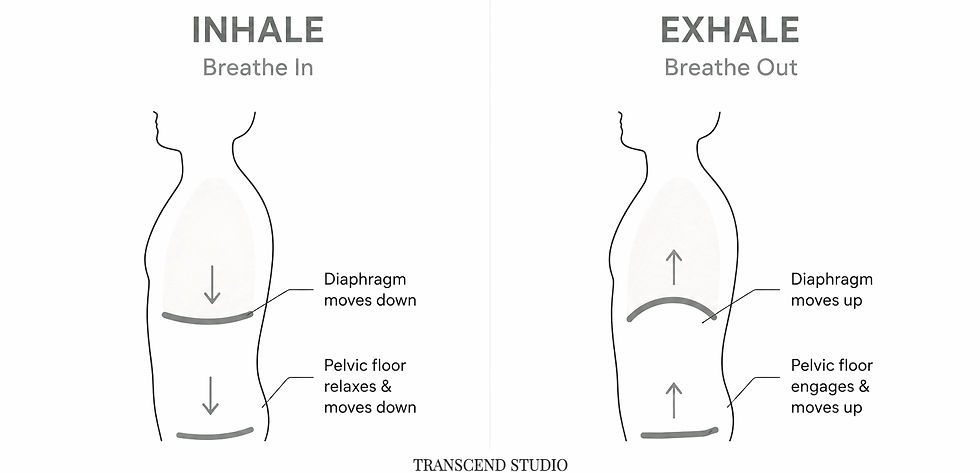
The second gear that involves while humming is the vocal cords which engages in to articulate how we project the sound generated from the core muscles. Articulation helps singing ( in this case humming) those notes from the tune, beautifully.
This techniques is often used as a prime warm up exercise to help circulate the blood flow, support voice projection and also prevent the vocal cords from restraining when it gets more challenging.
You can try this exercise either for 2 minutes while you are washing your face after waking up if you are in a rush, or sitting at your desk or couch and hum as long as you like. It should not hurt!
Practising this technique would naturally create a vibration around our throat area. Interesting to know, Interestingly, cats create a similar vibration when they purr, which is often associated with comfort and relaxation.
Notice humming in different register (higher or lower notes) will warm up those areas in our vocal territory. Our target at this point is the central area where is the most comfortable to hum, but feel free to explore!

The Chest voice
Let's talk about vocal power. Now we have warm up the vocal engine, its time to empower the chest. Simply starting to talk or singing in a tune will majorly do the job. This is where we switch from humming to singing by opening our mouse and project the voice. After the first step you should feel the the early power in your voice.
One simple way to explore the chest voice is by using vowel sounds such as: : "EE", "EH", "AH", "OH", "OO".
Examples:
EE (as in see)
EH (as in bed)
AH (as in father)
OH (as in go)
OO (as in food)
Sing them on simple melodies or comfortable tunes, allowing your voice to move naturally between different pitches without forcing or overthinking the exercise. Although there are many different practical videos available online to follow, you can create a routine that sounds fun and its practical for you on a daily/ weekly basis.
And again consider you can sing the tunes in lower register, and then gently travel around mid and higher register. Simple, safe and impactful.
Note that the trick is to emphasise sound by exaggerating the vowel shape with your mouth depending on the vowel. This is the place where you perfect the projection and articulation.
Exploring Your Vocal Range
You are almost ready for singing a tune beautifully, project your voice while communicating at your workplace with some healthy strength in your voice or project that presentation with confidence.
We want to finish our daily/ weekly routine by a technique called vocal sirens. This exercise is demonstrated by finding a very high note ( in any of the vowels) and let it slide down to the lowest note gently with some control, and often vice versa. Meaning you can find a low note with one of the vowels as you like and bring up as high as its comfortable.
Building a Consistent Vocal Routine
Although there are variable techniques to explore and extend your vocal range, this is just a quick and easy method followed by the other two practices to reach out to further notes for expressing the vocal cords and interaction muscles while talking, singing or giving an speech.
The goal is not to reach your highest or lowest note, but to explore your range gently and comfortably. These exercises do not need to take a long time to become effective. Consistency is often more important than duration. Even 5–10 minutes of focused vocal practice can help improve awareness, flexibility and confidence over time.
write a comment if you found any part of these simple exercises or perhaps the whole sequence beneficial or interesting.
If you'd like personalised guidance and feedback to accelerate your progress, you can book a session with us. A free induction session is a great place to start your journey. Start this journey by booking a free induction for a practical chat at book Music Mentor. This is a good place to be!
Birmingham | Online | In-Studio
LEARN • CREATE • PERFORM
Book Music Mentor


Comments